Craft & Embroidery
The Dochgir: The Women Who Stitch Baloch Identity
Meet the dochgir, the Baloch women whose hand embroidery carries heritage and family memory from one generation to the next. Also available in Urdu.
By Muraza · October 16, 2026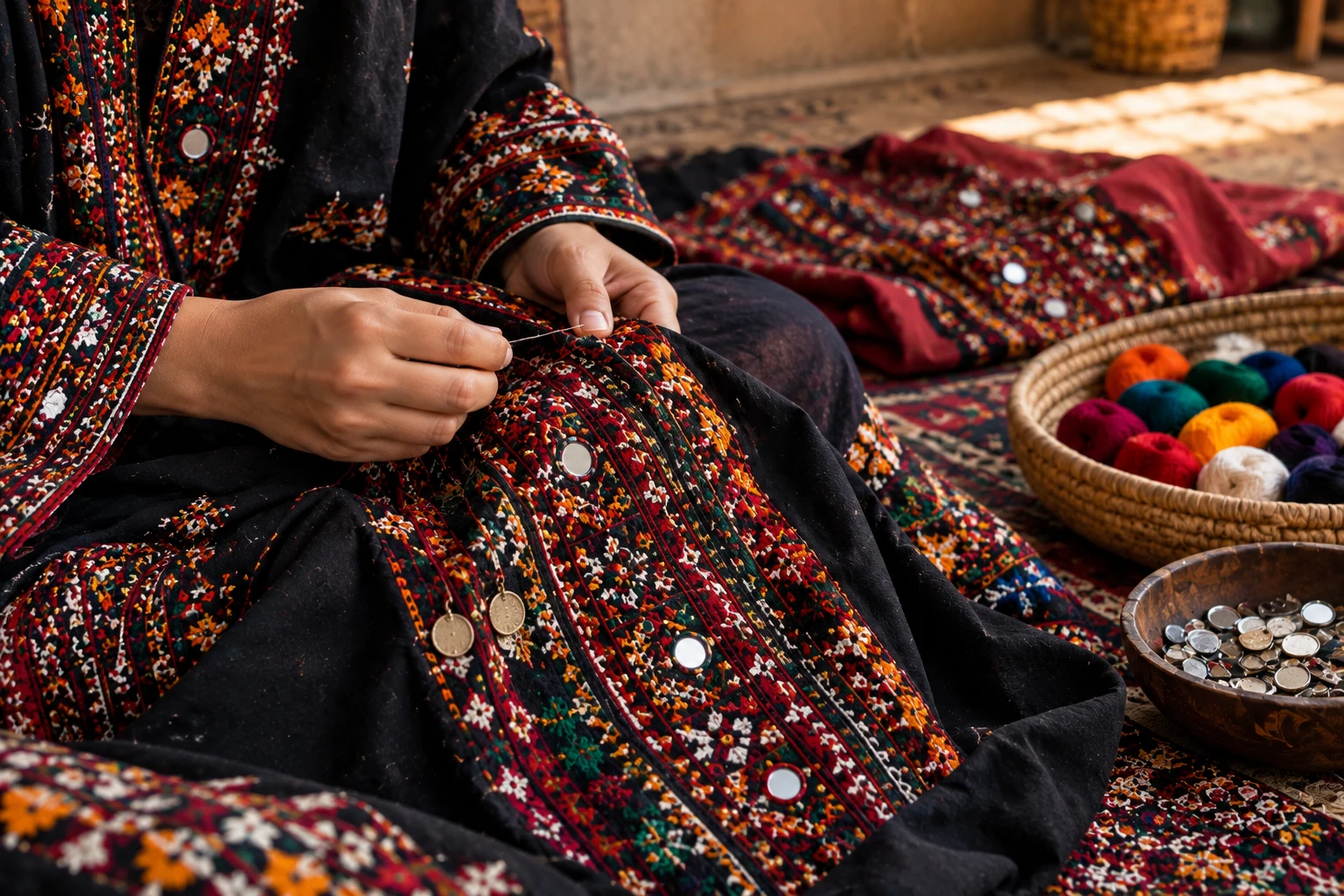
Before a Baloch dress is worn, it has been imagined, drawn in the mind and built stitch by stitch. The women who do this are called dochgir.
Walk into any gathering of Baloch families, in Karachi, Muscat, Zahedan or London, and you notice the dresses first: bands of colour, tiny mirrors catching the light, patterns so dense the fabric almost disappears. Behind each one is a dochgir, a woman who embroiders by hand.
Share your story: send us a photo of a dress embroidered by your mother or grandmother, and tell us who made it, where she was from and what the pattern is called. We’ll preserve it, with her name, in our gallery. Send it at baloch.net/contribute
Sources: Dawn; Balochi needlework (Wikipedia); Borderless Journal, “Embroidering Hunger”; Journal of History, Culture and Art Research, comparison of Iranian and Pakistani Balochi embroidery.
Walk into any gathering of Baloch families, in Karachi, Muscat, Zahedan or London, and you notice the dresses first: bands of colour, tiny mirrors catching the light, patterns so dense the fabric almost disappears. Behind each one is a dochgir, a woman who embroiders by hand.
A Craft Without a Recorded Beginning
The exact history of Balochi needlework is unknown. It has traditionally been women's work, taught from one generation to the next, with no founding workshop and no famous master. The embroiderers are called dochgir and the embroidery doch. A dochgir is a designer, a teacher and a keeper of memory.What Is Stitched Into a Dress
Common motifs include arrows, “chicken feet,” diamonds and flowers. Two of its best-known techniques are mirror work and coin work, which make the cloth part textile, part jewellery. Dochgirs also invent and name new patterns, passed on or reshaped by whoever stitches next.A Dress That Outlasts Its Fabric
The traditional long dress, the pashk, is often handed from mother to daughter. Because hand embroidery does not wear away, a worn-out garment can have its embroidery cut out and sewn onto new fabric, so a daughter may wear her mother’s work, and her granddaughter after her.One Tradition, Many Places
A study of embroidery in Iranian and Pakistani Balochistan found significant similarities, with differences in stitching technique and motif density. The shape of the dress is shared; the details change from place to place, like regional accents of one language.Craft That Feeds Families
For many women, the needle is a livelihood. In Kuddan, embroiderers support their families with orders from village women and from buyers in Turbat, Quetta and the Middle East. Yet the work’s value is not always matched by what dochgir earn. Dawn reported advocates saying Balochi-style designs have appeared on international fashion labels without credit to the embroiderers.Keeping the Thread Alive
Know their names, learn their patterns and buy directly from them where you can. If you have a pashk in your family, ask who made it, what the pattern is called and which village it came from. Those answers are the real archive.Share your story: send us a photo of a dress embroidered by your mother or grandmother, and tell us who made it, where she was from and what the pattern is called. We’ll preserve it, with her name, in our gallery. Send it at baloch.net/contribute
Sources: Dawn; Balochi needlework (Wikipedia); Borderless Journal, “Embroidering Hunger”; Journal of History, Culture and Art Research, comparison of Iranian and Pakistani Balochi embroidery.