
Cuisine
Sajji: Salt, Fire and Patience
Meat, salt, fire and time. Discover Balochi sajji, the slow-roasted Eid tradition where waiting is part of the recipe. Also available in Urdu.
By Khalil Baloch · October 21, 2026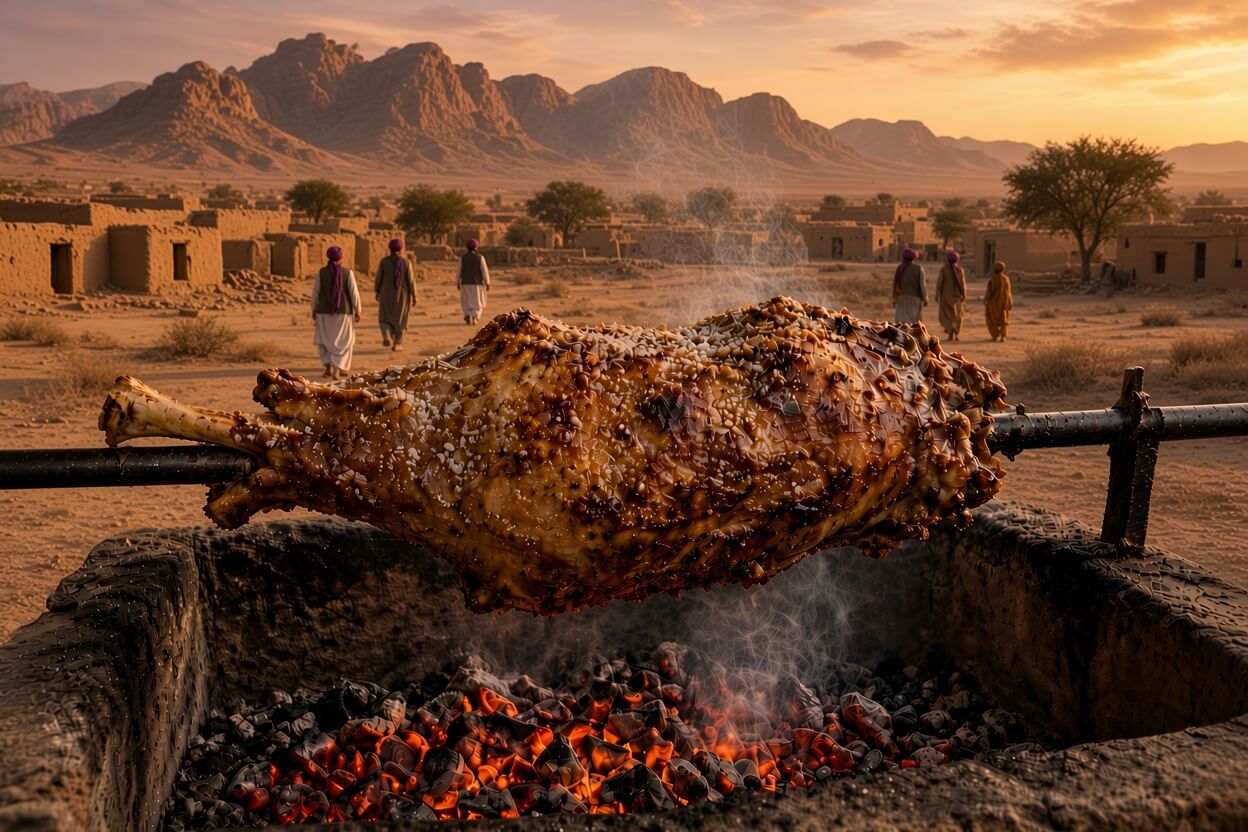
Sajji, A balochi Dish
Picture the morning of Eid al-Adha in Quetta. The prayers are over, the sacrifice is done, and a family sets out with a bag of meat: the thigh, the shoulder, the best pieces of their own animal. They are not heading to the kitchen. They are heading to the sajji shop, where a line has already formed.Sajji is the Balochi way of roasting meat, and its recipe fits in one sentence: meat, salt, fire and time. Everything else is patience.
The Beauty of Only Salt
Many famous roasts depend on spices, marinades and long lists of ingredients. Balochi sajji does the opposite. In the traditional method, the meat is seasoned with salt and nothing else, about an hour before it goes on the fire, so the salt can bring out its own juices. Then the pieces go onto long skewers beside glowing coals in an open oven and roast slowly for around four hours. What comes out is crisp on the outside, juicy inside, and tastes of smoke and meat and nothing that was not needed.
A Taste Born in the Mountains
Where did it begin? People who make sajji often say it comes from the mountains, from hunters who cooked their meat slowly over fire, without spices, using what they had. Some cooks say the idea is as old as cooking itself. It was practised mainly in interior areas such as Kohlu and Dera Bugti, and Arab News reports that the sajji shop tradition took shape in Quetta in the 1960s. As with many dishes, the exact origin is debated and no document settles it. But the logic is easy to see: when you have meat, salt and time, you have sajji.
Four Hours Together
The wait is part of the dish. On the day before Eid, one shop on Quetta's Jinnah Road had 68 orders from families bringing their own sacrificial meat. People queue, then wait while it roasts, and the hours become an occasion in themselves. Neighbours meet in the line, relatives arrive, tea is poured, children run around. Sajji cannot be rushed, so it is almost never eaten alone.
In Balochistan the Eid feast also runs longer than in much of the country. Sajji dinners go on for a week or more, and one Quetta cook says gatherings continue for ten days or more. Sajji is also served at picnics and gatherings and when guests arrive. For many families it is not Eid without it. One customer said he grew up watching his father prepare sajji every Eid for friends, and that the whole family developed a taste for it.
Tradition and Change
Today you can also find chicken sajji, a quicker and cheaper version that has become popular. Some shops now add a little black pepper if customers ask, but carefully, so that the smoky flavour is not lost. Home cooks and city restaurants have their own variations, with marinades and spices of their own. The traditional shops, though, guard the old idea: salt, fire and time.
What Sajji Teaches
In a world of shortcuts, sajji is a lesson in doing less, and doing it well. You do not improve it by adding something. You improve it by waiting: a good fire, good meat and the courage to leave it alone. It is a very Balochi kind of confidence, a hospitality that needs no decoration, and generosity measured in hours.
Share your story: how does your family make sajji? Do you remember an Eid when you queued at a sajji shop, a recipe passed down from a grandparent, or a taste you miss when you are far from home? Send it to us at baloch.net/contribute and we will preserve it.