Craft & Embroidery
The Dochgir: The Women Who Stitch Baloch Identity
Contributed by Muraza · October 16, 2026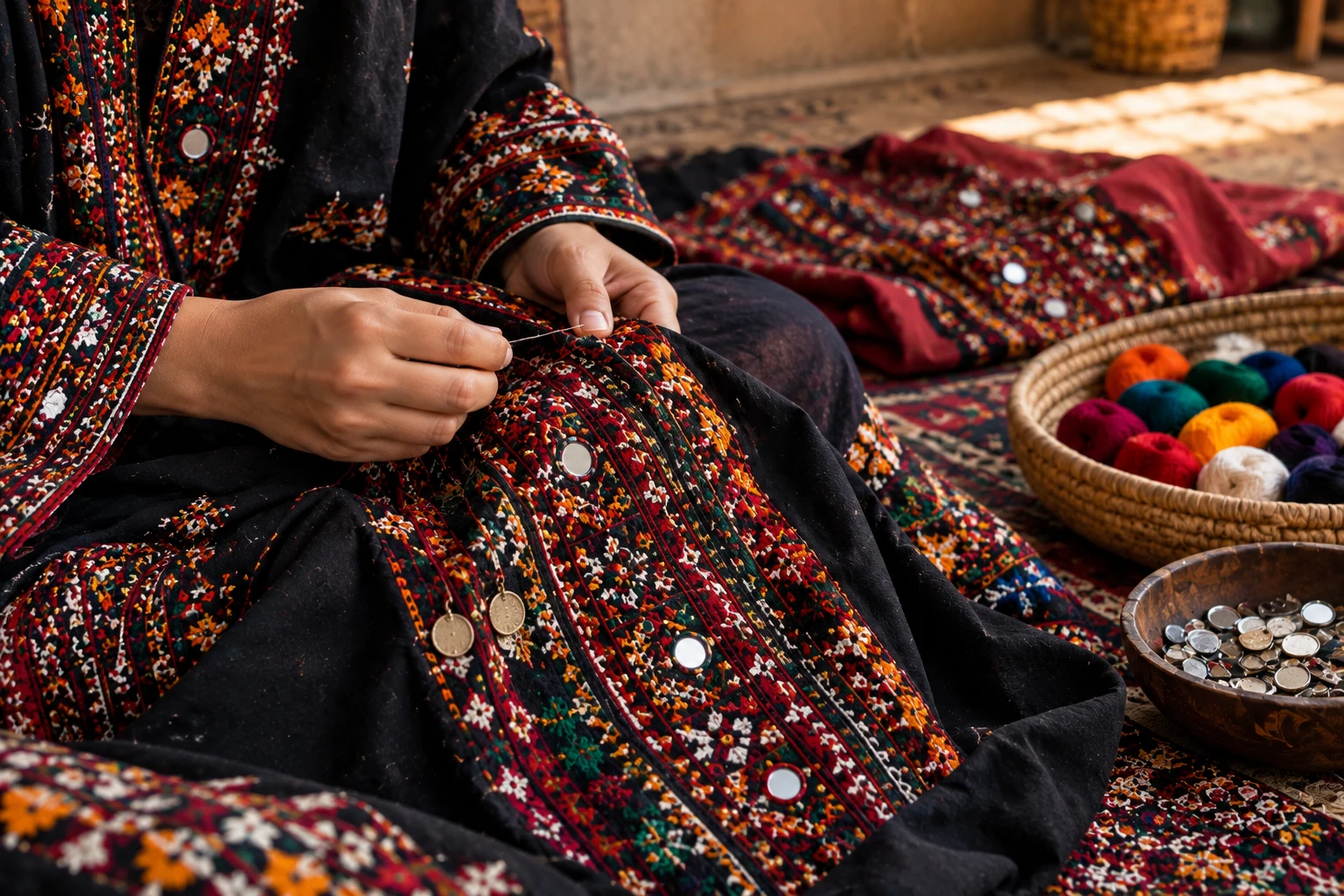
<article class="baloch-story">
<p class="lang-jump"><a href="#urdu" hreflang="ur" lang="ur">اردو میں پڑھیں</a></p>
<p><strong>Before a Baloch dress is worn, it has been imagined, drawn in the mind and built stitch by stitch. The women who do this are called dochgir.</strong></p>
<p>Walk into any gathering of Baloch families, in Karachi, Muscat, Zahedan or London, and you notice the dresses first: bands of colour, tiny mirrors catching the light, patterns so dense the fabric almost disappears. Behind each one is a dochgir, a woman who embroiders by hand.</p>
<h2>A Craft Without a Recorded Beginning</h2>
<p>The exact history of Balochi needlework is unknown. It has traditionally been women's work, taught from one generation to the next, with no founding workshop and no famous master. The embroiderers are called <em>dochgir</em> and the embroidery <em>doch</em>. A dochgir is a designer, a teacher and a keeper of memory.</p>
<h2>What Is Stitched Into a Dress</h2>
<p>Common motifs include arrows, “chicken feet,” diamonds and flowers. Two of its best-known techniques are mirror work and coin work, which make the cloth part textile, part jewellery. Dochgirs also invent and name new patterns, passed on or reshaped by whoever stitches next.</p>
<h2>A Dress That Outlasts Its Fabric</h2>
<p>The traditional long dress, the <em>pashk</em>, is often handed from mother to daughter. Because hand embroidery does not wear away, a worn-out garment can have its embroidery cut out and sewn onto new fabric, so a daughter may wear her mother’s work, and her granddaughter after her.</p>
<h2>One Tradition, Many Places</h2>
<p>A study of embroidery in Iranian and Pakistani Balochistan found significant similarities, with differences in stitching technique and motif density. The shape of the dress is shared; the details change from place to place, like regional accents of one language.</p>
<h2>Craft That Feeds Families</h2>
<p>For many women, the needle is a livelihood. In Kuddan, embroiderers support their families with orders from village women and from buyers in Turbat, Quetta and the Middle East. Yet the work’s value is not always matched by what dochgir earn. <a href="https://www.dawn.com/news/amp/1656434" target="_blank" rel="noopener noreferrer">Dawn reported</a> advocates saying Balochi-style designs have appeared on international fashion labels without credit to the embroiderers.</p>
<h2>Keeping the Thread Alive</h2>
<p>Know their names, learn their patterns and buy directly from them where you can. If you have a pashk in your family, ask who made it, what the pattern is called and which village it came from. Those answers are the real archive.</p>
<p><strong>Share your story:</strong> <a href="https://baloch.net/contribute">send us a photo</a> of a dress embroidered by your mother or grandmother, and tell us who made it, where she was from and what the pattern is called. We’ll preserve it, with her name, in our gallery.</p>
<hr>
<section id="urdu" lang="ur" dir="rtl" class="urdu-story">
<h2>دوچ گر: بلوچی کڑھائی کو زندہ رکھنے والی خواتین</h2>
<p><strong>بلوچی لباس پہننے سے پہلے ذہن میں تصور ہوتا ہے، پھر ہر ٹانکے کے ساتھ حقیقت بنتا ہے۔ یہ کام کرنے والی خواتین دوچ گر کہلاتی ہیں۔</strong></p>
<p>کراچی، مسقط، زاہدان یا لندن میں بلوچ خاندانوں کی کسی بھی محفل میں سب سے پہلے لباس پر نظر پڑتی ہے: رنگوں کی پٹیاں، چمکتے ننھے شیشے اور اتنے گھنے نقش کہ کپڑا بمشکل دکھائی دے۔ ہر لباس کے پیچھے ایک دوچ گر ہوتی ہے، جو ہاتھ سے کڑھائی کرتی ہے۔</p>
<h3>ایک ہنر جس کی ابتدا کا ریکارڈ نہیں</h3>
<p>بلوچی کڑھائی کی درست تاریخ معلوم نہیں۔ یہ روایتی طور پر خواتین کا ہنر ہے جو نسل در نسل منتقل ہوتا آیا ہے، اس کا نہ کوئی بانی ادارہ ہے نہ مشہور استاد۔ کڑھائی کرنے والی خواتین کو <em>دوچ گر</em> اور کڑھائی کو <em>دوچ</em> کہتے ہیں۔ دوچ گر ڈیزائنر بھی ہے، استاد بھی اور یادوں کی محافظ بھی۔</p>
<h3>لباس میں کیا سلا ہوتا ہے</h3>
<p>عام نقوش میں تیر، مرغی کے پنجوں جیسے نقش، ہیرے کی شکلیں اور پھول شامل ہیں۔ شیشے اور سکوں کا کام مشہور تکنیکیں ہیں، جن سے سطح کچھ کپڑا اور کچھ زیور لگتی ہے۔ دوچ گر نئے نقش بھی بناتی ہیں اور انہیں نام دیتی ہیں۔</p>
<h3>وہ لباس جو کپڑے سے زیادہ جیتا ہے</h3>
<p>روایتی لمبا لباس <em>پشک</em> اکثر ماں سے بیٹی کو ملتا ہے۔ ہاتھ کی کڑھائی گھستی نہیں، اس لیے پرانا لباس خراب ہو جائے تو کڑھائی کاٹ کر نئے کپڑے پر سی دی جاتی ہے، یوں بیٹی ماں کا کام پہنتی ہے اور اس کے بعد پوتی بھی۔</p>
<h3>ایک روایت، کئی علاقے</h3>
<p>ایران اور پاکستان کے بلوچستان کی کڑھائی کے ایک مطالعے میں نمایاں مماثلتیں ملیں، البتہ سلائی کی تکنیک اور نقوش کی گھنائی میں فرق بھی تھا۔ لباس کی شکل مشترک ہے اور تفصیلات علاقے کے ساتھ بدلتی ہیں، جیسے ایک زبان کے مختلف لہجے۔</p>
<h3>وہ ہنر جو گھر چلاتا ہے</h3>
<p>بہت سی خواتین کے لیے سوئی روزگار ہے۔ کدان کی کڑھائی کرنے والی خواتین گاؤں کی خواتین اور تربت، کوئٹہ اور مشرقِ وسطیٰ کے خریداروں سے آرڈر لیتی ہیں۔ مگر کام کی قدر ہمیشہ آمدنی میں نظر نہیں آتی۔ <a href="https://www.dawn.com/news/amp/1656434" target="_blank" rel="noopener noreferrer">ڈان کی رپورٹ</a> کے مطابق بلوچی طرز کے ڈیزائن بین الاقوامی برانڈز پر کڑھائی کرنے والی خواتین کے حوالے کے بغیر استعمال ہوئے۔</p>
<h3>دھاگے کو زندہ رکھنا</h3>
<p>ان کے نام جانیں، نقش سیکھیں اور جہاں ممکن ہو براہِ راست ان سے خریدیں۔ اگر آپ کے خاندان میں کوئی پشک ہے تو پوچھیں کہ اسے کس نے بنایا، نقش کا نام کیا ہے اور کس گاؤں سے ہے۔ یہی اصل ریکارڈ ہے۔</p>
<p><strong>اپنی کہانی بھیجیں:</strong> ماں یا دادی کے کڑھے ہوئے لباس کی <a href="https://baloch.net/contribute">تصویر بھیجیں</a> اور بتائیں کہ اسے کس نے بنایا، وہ کہاں کی تھیں اور نقش کا نام کیا ہے۔ ہم اسے اس خاتون کے نام کے ساتھ اپنی گیلری میں محفوظ کریں گے۔</p>
</section>
<hr>
<h2>Sources</h2>
<p><a href="https://www.dawn.com/news/amp/1656434" target="_blank" rel="noopener noreferrer">Dawn</a>; <a href="https://en.wikipedia.org/wiki/Balochi_needlework" target="_blank" rel="noopener noreferrer">Balochi needlework (Wikipedia)</a>; <a href="https://borderlessjournal.com/tag/dochgir" target="_blank" rel="noopener noreferrer">Borderless Journal</a>; <a href="https://jfava.ut.ac.ir/article_92039.html?lang=en" target="_blank" rel="noopener noreferrer">Journal of History, Culture and Art Research</a>.</p>
</article>
<p class="lang-jump"><a href="#urdu" hreflang="ur" lang="ur">اردو میں پڑھیں</a></p>
<p><strong>Before a Baloch dress is worn, it has been imagined, drawn in the mind and built stitch by stitch. The women who do this are called dochgir.</strong></p>
<p>Walk into any gathering of Baloch families, in Karachi, Muscat, Zahedan or London, and you notice the dresses first: bands of colour, tiny mirrors catching the light, patterns so dense the fabric almost disappears. Behind each one is a dochgir, a woman who embroiders by hand.</p>
<h2>A Craft Without a Recorded Beginning</h2>
<p>The exact history of Balochi needlework is unknown. It has traditionally been women's work, taught from one generation to the next, with no founding workshop and no famous master. The embroiderers are called <em>dochgir</em> and the embroidery <em>doch</em>. A dochgir is a designer, a teacher and a keeper of memory.</p>
<h2>What Is Stitched Into a Dress</h2>
<p>Common motifs include arrows, “chicken feet,” diamonds and flowers. Two of its best-known techniques are mirror work and coin work, which make the cloth part textile, part jewellery. Dochgirs also invent and name new patterns, passed on or reshaped by whoever stitches next.</p>
<h2>A Dress That Outlasts Its Fabric</h2>
<p>The traditional long dress, the <em>pashk</em>, is often handed from mother to daughter. Because hand embroidery does not wear away, a worn-out garment can have its embroidery cut out and sewn onto new fabric, so a daughter may wear her mother’s work, and her granddaughter after her.</p>
<h2>One Tradition, Many Places</h2>
<p>A study of embroidery in Iranian and Pakistani Balochistan found significant similarities, with differences in stitching technique and motif density. The shape of the dress is shared; the details change from place to place, like regional accents of one language.</p>
<h2>Craft That Feeds Families</h2>
<p>For many women, the needle is a livelihood. In Kuddan, embroiderers support their families with orders from village women and from buyers in Turbat, Quetta and the Middle East. Yet the work’s value is not always matched by what dochgir earn. <a href="https://www.dawn.com/news/amp/1656434" target="_blank" rel="noopener noreferrer">Dawn reported</a> advocates saying Balochi-style designs have appeared on international fashion labels without credit to the embroiderers.</p>
<h2>Keeping the Thread Alive</h2>
<p>Know their names, learn their patterns and buy directly from them where you can. If you have a pashk in your family, ask who made it, what the pattern is called and which village it came from. Those answers are the real archive.</p>
<p><strong>Share your story:</strong> <a href="https://baloch.net/contribute">send us a photo</a> of a dress embroidered by your mother or grandmother, and tell us who made it, where she was from and what the pattern is called. We’ll preserve it, with her name, in our gallery.</p>
<hr>
<section id="urdu" lang="ur" dir="rtl" class="urdu-story">
<h2>دوچ گر: بلوچی کڑھائی کو زندہ رکھنے والی خواتین</h2>
<p><strong>بلوچی لباس پہننے سے پہلے ذہن میں تصور ہوتا ہے، پھر ہر ٹانکے کے ساتھ حقیقت بنتا ہے۔ یہ کام کرنے والی خواتین دوچ گر کہلاتی ہیں۔</strong></p>
<p>کراچی، مسقط، زاہدان یا لندن میں بلوچ خاندانوں کی کسی بھی محفل میں سب سے پہلے لباس پر نظر پڑتی ہے: رنگوں کی پٹیاں، چمکتے ننھے شیشے اور اتنے گھنے نقش کہ کپڑا بمشکل دکھائی دے۔ ہر لباس کے پیچھے ایک دوچ گر ہوتی ہے، جو ہاتھ سے کڑھائی کرتی ہے۔</p>
<h3>ایک ہنر جس کی ابتدا کا ریکارڈ نہیں</h3>
<p>بلوچی کڑھائی کی درست تاریخ معلوم نہیں۔ یہ روایتی طور پر خواتین کا ہنر ہے جو نسل در نسل منتقل ہوتا آیا ہے، اس کا نہ کوئی بانی ادارہ ہے نہ مشہور استاد۔ کڑھائی کرنے والی خواتین کو <em>دوچ گر</em> اور کڑھائی کو <em>دوچ</em> کہتے ہیں۔ دوچ گر ڈیزائنر بھی ہے، استاد بھی اور یادوں کی محافظ بھی۔</p>
<h3>لباس میں کیا سلا ہوتا ہے</h3>
<p>عام نقوش میں تیر، مرغی کے پنجوں جیسے نقش، ہیرے کی شکلیں اور پھول شامل ہیں۔ شیشے اور سکوں کا کام مشہور تکنیکیں ہیں، جن سے سطح کچھ کپڑا اور کچھ زیور لگتی ہے۔ دوچ گر نئے نقش بھی بناتی ہیں اور انہیں نام دیتی ہیں۔</p>
<h3>وہ لباس جو کپڑے سے زیادہ جیتا ہے</h3>
<p>روایتی لمبا لباس <em>پشک</em> اکثر ماں سے بیٹی کو ملتا ہے۔ ہاتھ کی کڑھائی گھستی نہیں، اس لیے پرانا لباس خراب ہو جائے تو کڑھائی کاٹ کر نئے کپڑے پر سی دی جاتی ہے، یوں بیٹی ماں کا کام پہنتی ہے اور اس کے بعد پوتی بھی۔</p>
<h3>ایک روایت، کئی علاقے</h3>
<p>ایران اور پاکستان کے بلوچستان کی کڑھائی کے ایک مطالعے میں نمایاں مماثلتیں ملیں، البتہ سلائی کی تکنیک اور نقوش کی گھنائی میں فرق بھی تھا۔ لباس کی شکل مشترک ہے اور تفصیلات علاقے کے ساتھ بدلتی ہیں، جیسے ایک زبان کے مختلف لہجے۔</p>
<h3>وہ ہنر جو گھر چلاتا ہے</h3>
<p>بہت سی خواتین کے لیے سوئی روزگار ہے۔ کدان کی کڑھائی کرنے والی خواتین گاؤں کی خواتین اور تربت، کوئٹہ اور مشرقِ وسطیٰ کے خریداروں سے آرڈر لیتی ہیں۔ مگر کام کی قدر ہمیشہ آمدنی میں نظر نہیں آتی۔ <a href="https://www.dawn.com/news/amp/1656434" target="_blank" rel="noopener noreferrer">ڈان کی رپورٹ</a> کے مطابق بلوچی طرز کے ڈیزائن بین الاقوامی برانڈز پر کڑھائی کرنے والی خواتین کے حوالے کے بغیر استعمال ہوئے۔</p>
<h3>دھاگے کو زندہ رکھنا</h3>
<p>ان کے نام جانیں، نقش سیکھیں اور جہاں ممکن ہو براہِ راست ان سے خریدیں۔ اگر آپ کے خاندان میں کوئی پشک ہے تو پوچھیں کہ اسے کس نے بنایا، نقش کا نام کیا ہے اور کس گاؤں سے ہے۔ یہی اصل ریکارڈ ہے۔</p>
<p><strong>اپنی کہانی بھیجیں:</strong> ماں یا دادی کے کڑھے ہوئے لباس کی <a href="https://baloch.net/contribute">تصویر بھیجیں</a> اور بتائیں کہ اسے کس نے بنایا، وہ کہاں کی تھیں اور نقش کا نام کیا ہے۔ ہم اسے اس خاتون کے نام کے ساتھ اپنی گیلری میں محفوظ کریں گے۔</p>
</section>
<hr>
<h2>Sources</h2>
<p><a href="https://www.dawn.com/news/amp/1656434" target="_blank" rel="noopener noreferrer">Dawn</a>; <a href="https://en.wikipedia.org/wiki/Balochi_needlework" target="_blank" rel="noopener noreferrer">Balochi needlework (Wikipedia)</a>; <a href="https://borderlessjournal.com/tag/dochgir" target="_blank" rel="noopener noreferrer">Borderless Journal</a>; <a href="https://jfava.ut.ac.ir/article_92039.html?lang=en" target="_blank" rel="noopener noreferrer">Journal of History, Culture and Art Research</a>.</p>
</article>